Tuesday, 27 December 2016

Film Distribution

 1.   What is meant by the term film distribution?
A film distributor is responsible for the marketing of a film whether it be for a specific target audience, a broader target audience or a large target audience.

2.   What does a film distributor do?
The film distributor creates a promotional campaign for the film. The film distributor also decides what platforms the film will be put out on and how accessible it will be i.e. cinema, streaming, DVD, TV etc.

3. How does reach relate to film distribution?
The bigger the reach, the bigger the audience. Having a bigger reach attracts a potentially much bigger audience than a film with a small reach, it is advertising to a much bigger scale. However a bigger reach comes with a bigger risk margin and costs more, Woman in Black is an example of a film with a big reach being successful and having effective advertising, whereas Green Lantern had a massive budget and advertising campaign and was badly received with negative reviews and failed at the box office and dropped in popularity.

4. What is meant by the marketing plan?
The marketing plan is a plan that includes the marketing objectives set by the company to be achieved within a certain timescale. These objectives may include creating visibility and awareness and encourage interest of the film. To start with marketing distribution must identify what the consumers want by market research and an analysis of the current market situation. Ways of marketing the film include posters, trailers, online and mobile apps in order for the film to be successful. Critics can also potentially boost the film's popularity, if they give a good review more people are likely to go and watch it based on the positive reviews. The last way of promoting the film is through social media, social media is a big platform to use with a big audience, when one person talks/posts/tweets about it more people will hear about it and may go and see it because of this, social media sites include Twitter, Instagram, Facebook etc. 

5. What is meant by the distribution plan?
The distribution plan is created by the management team, they transfer their product to retailers and then to consumers. For example, the distributors may decide the release date based on appealing to the target audience, a Halloween film around Halloween will target the appropriate audience, the team can therefore advertise through products and various services that appeal to the target audience. The distribution plan must also include the budget for distributing. If the budget is low then they won't be able to spend lots of money on promoting the film for the appropriate target audience, however if the budget is high the team are able to spend much more on advertising and promotion and may even be able to aim at other audiences as well as their target audience. The distributor will sign a contract that allows them to promote the film.

6. What is the difference between advertising, publicity and promotion?
Advertising is materials made across different platforms
Publicity is mainstream exposure
Promotion is raising awareness of the film

7. Find a teaser poster, teaser trailer, main poster and main trailer for a horror film and put them on your Blog – who was the distributor and in how many countries was it released? Can you find how many screen it was shown in on the opening weekend?
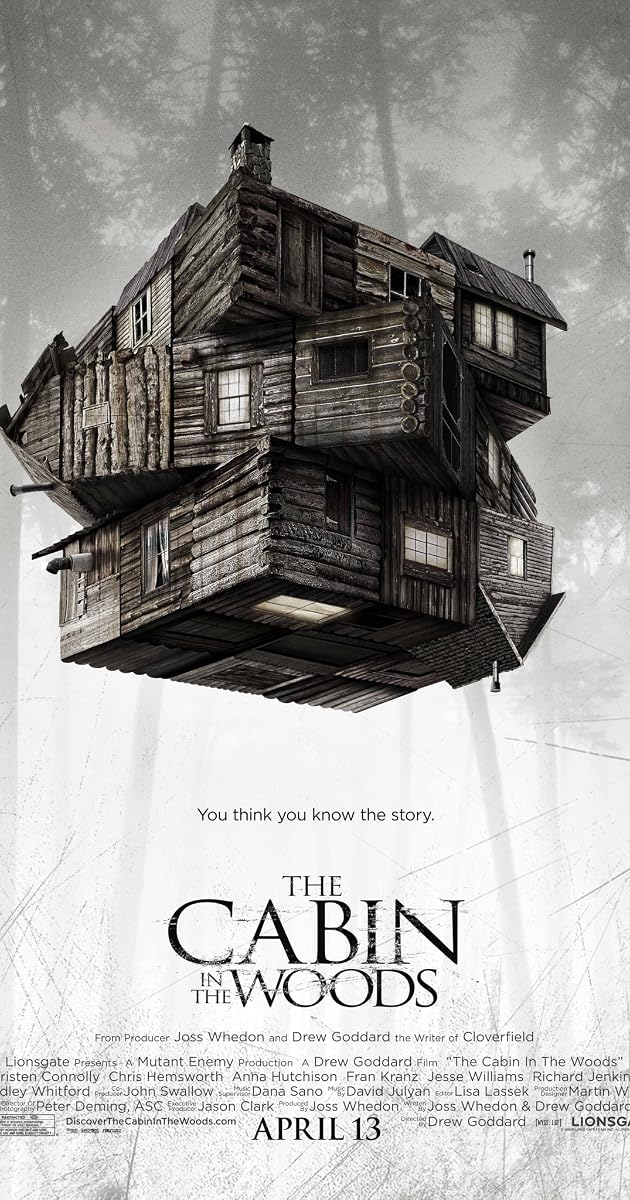
Cabin In The Woods
Distributed by: Lionsgate
Countries released in: 39
Screens shown on in the opening weekend: 2.811

Thursday, 17 November 2016

representation of women

This essay will be exploring the representation in which women are given within the horror genre. To begin with I will focus partially upon the historical representation through to the current depictions of women within the horror genre. I will furthermore attempt to examine these representations and express upon any changes within that representation that may have occurred. Additionally, I will discuss what the representations I have discovered say about women in society itself. Lastly to aid this investigation I will be analysing observations that have been created by theorists such as Carol Clover, Laura Mulvey and Jeremy Tunstall.

The first thing we can see about these women is that they are all relatively young, also it can be seen that all these women are either in underwear or very revealing clothing. The women are all wearing black undergarment and one with a red dress, the black symbolising darkness and sin whereas the red connotes desire and the devil, it could also be displaying the blood shed within the film, this is there for the pleasure of voyeuristic men to watch the young, almost naked women suffer, this is sometimes known as gorenography or torture porn. Feminist film critic Laura Mulvey labelled this 'Male Gaze' in her 1975 essay 'Visual Pleasure and Narrative Cinema', and is the concept that women are used in films to be looked at as objects of desire. In her essay Mulvey says "Much commercial cinema puts the spectator into the position of an 'appraising heterosexual male' by adopting techincal camera techniques which present women as objects to be looked at. The audience is literally put into the eyes of the male - usually the protagonist - who then looks voyeuristically at an objectified female." and so under Jeremy Turnstall (The Media in Britain 1983)'s observations of gender representation and four character roles (sexual, domestic, marital and consumer) male gaze theory is sexual, as women are portrayed as sexual objects.

The 'final girl' theory is a theory first devised by Carol Clover in her 1992 book 'Men, Women and Chainsaws: Gender in the Modern Horror Film' and is the theory of there being only one surviving female at the end of the film. In her book Carol Clover listed three key traits for a final girl, she is virginal and retains purity and innocence, she is androgynous in her name, appearance and clothing, and she fights back, either by escaping the killer or actually physically fighting back. In terms of Jeremy Turnstall's four character roles for women the final girl usually fits under all four roles. The final girl is usually of a middle class background, well educated and hard working, all domestic and consumer roles that forms the marital role. Examples of final girls in horror films include Dana in Cabin in the Woods and Laurie in Halloween, although Laurie challenges this by smoking a joint in the car with her friend Annie (who gets killed by Michael) but ultimately outsmarts Michael and survives at the end.

history of horror


History Of Horror

The horror genre has many ancient origins and roots in religious traditions and folklores, these tend to be focusing on death, the afterlife
Lumière brothers in 1895 created le squelette joyeux . Both audiences and filmmakers demonstrated an early interest in the macabre, although the term 'horror' wasn't used to describe a film genre until the 1930s. These early horror films were referred to at the time as 'Spook tales


Roots To Classic Literature

   
 Frankenstein (written in 1818)
The film Frankenstein was produced by Carl Laemmle, Jr. and directed by James Whale, Frankenstein is a film that was derived from classic literature and widely recognised around the world. The film is about a scientist and his assistant who dig up corpses to build a man animated by electricity, but the assistant accidentally gives the creature an abnormal, murderer's brain.


Dracula (1931)
The film Dracula was produced and directed by Tod Browning, Dracula is a film that was also derived from classic literature, it is well known throughout the world. The film is about the ancient vampire count Dracula and his arrival in England and follows his victim, mina.


The Horror Of The Silent Era 

Silent Films are the films of the early era that were without synchronized sound, from the earliest film (1891)
Horror movies were reborn in the 1930s. The advent of sound, as well as changing the whole nature of cinema forever, had a huge impact on the horror genre.

Monsters And Mad Scientists 

      During the 1930s horror was reborn and featured monsters and mad scientists as the main characters, for example Frankenstein
sound was an important role in these movies as the use of dramatic music built up suspense.
      19th century literary classics were dominating this era still, the films were often set in far off places and the characters would be dressed in period costumes.  
     universal studios  emerged during this decade, finding fame with their horrors, Frankenstein and Dracula. Other famous films from this era include King Kong, The Mummy, Freaks and Bride of Frankenstein 

The Primal Animal Within; Werewolves And Cat People (1940s) 

      This was during world war 2, werewolves could be a representation of the nazis, the idea that when a werewolf bites a human they can transform into this monster and pass on the disease. this has possible links with Hitlers dictatorships and spread of his propaganda.
      The werewolf in Wolfman dies this could be a connotation of Hitlers defeat. Around the time of the 1940s the film industry was an American product and even combined popular themes of the prior two decades with Frankenstein Meets The Wolf Man (1943) - a sequel to the original Frankenstein film.


    Mutant creatures and alien invaders 

II The horror genre changed massively in the 1950s, the antagonists in horror films took a plunge into the unknown with science fiction alien and mutant lifeforms. Films such as The Beast of 20,000 Fathoms (1953) and The Tingler (1959) exhibited the differences and comparisons to films from the past decade. The 1950s marked the start of the Cold War, "the iron curtain that fell upon Europe", the threat Russia possessed and the fear of communism had a big effect on communities and the film industry. Invasion of the Body Snatchers (1956) was a reflection of the fear of communism. 


Gore returns with a vengeance 

At the turn of the 2000s horror films were heavily condemned and many even called for the banning of horror movies in the name of "world peace". 9/11 changed the world's perception of what is considered frightening and set the cultural agenda for the following years. Come the mid 2000s the horror genre was as popular as ever with the rise of 'torture porn'. Audiences preferred to watch films about people being tortured and death was inevitable in the ultimate end. Final Destination (2000) was one of the first 'torture porn' films, with films such as the Saw and Hostel franchises defining the era.

Wednesday, 16 November 2016

Halloween Analysis

“Halloween” analysis essay

The film Halloween is a slasher horror from 1978 directed by John Carpenter, as well as being co-written with Debra Hill, Halloween is iconic because it established the Slasher genre. This film follows the escape of psychotic murder from a psychiatric asylum, in which he was imprisoned after murdering his sister on Halloween night. The film follows the convention of having an anniversary to kill again, he does this when he returns to his home town on the 30th of October.

 The film is set during 1963, in the small community of Haddonfield however the beginning of the film is set 15 years’ prior in the same location on Halloween night.
Todorov’s theory on narrative structures for films within the horror genre suggested that all films begin with an equilibrium, however in Halloween we don’t find an equilibrium as it begins with a murder. Following Todorov’s theory the equilibrium should then be disrupted by an event, this event is called a disequilibrium, the main event within the film is Michael Myers return to Haddonfield as this leads to the chaotic murders that happen within the isolated community.

There are at least four character types within the Halloween that keep reappearing in the narrative in relation to Propps theory. Firstly, psychotic Michael Myers is the villain throughout the film and this is made obvious as he brutally murders his sister in her bedroom on the night of Halloween, this idea of him being the villain is further reinforced when we witness his escape from the mental asylum, this is again reiterated by the polices urgency to find him. Dr. Loomis is the hero of the film, although not the archetypal, good looking hero, he is the one who goes after and tries to stop Michael when he returns to the town as he knows what Michael is going to do. Lauri is the victim in Halloween, she spends the most part of the film being stalked by Myers, who is trying to kill her, being as Lauri survives Carol Clover’s final girl theory applies to Halloween. Lauri’s friends Lindsey and Annie are also female victims but both die as unlike Lauri they have sex, drink and do drugs, whereas Lauri has all the typical traits of Carol Clover’s final girl, she is well educated, of a middle class background, doesn’t go out, drink, do drugs or have sex. The helper is the Sheriff, although he doesn’t believe the doctor to begin with, he aids Dr. Loomis in trying to stop Myers.

There are 4 clear instances of binary opposition in Halloween:

Good and Evil 
Dr. Loomis and the Sheriff are the good trying to stop the evil (Michael), equally Michael is the villain going after the heroin Lauri.

Natural and Supernatural
Michael survives 6 bullets and falling off balcony, whereas his victims are easily killed.

Purity and Promiscuity
Lauri and her friends; Lauri is interested in her education and books, her friends are interested in going to parties, drinking and boys.

Past and Present
Halloween begins 15 years in the past with a young Michael murdering his sister, and then transitions to the present.


Thursday, 3 November 2016

Narrative Theory and The Crazies


The Crazies (2010) is a thriller horror directed by Breck Eisner, and takes place in the fictional town Ogden Marsh, Pierce County, Iowa ("the friendliest place on Earth") whose town water supply is accidentally infected with the "Trixie" virus. After an incubation period of 48 hours, the virus gradually transforms the mental state of the infected into cold, calculating, depraved, bloodthirsty killers ("Crazies") who then prey on family and neighbors alike. The Crazies is a remake of the original released in 1973 by the same name directed by independent horror film director George A. Romero, a filmmaker synonymous to the horror genre for his zombie film series made up of iconic films such as Dawn of the Dead (1978) and Day of the Dead (1985).

Narrative Structure
The opening of The Crazies does not follow Tzvetan Todorov's Classical Hollywood Narrative theory (CHN). According to Todorov's theory all films start with a state of calm normality, the equilibrium, in The Crazies the establishing shot of the film shows a burning town, which ushers in disorder from the off. Usually this would be the event of a film and disruption to the equilibrium, but this film's equilibrium is turmoil.
The film then continues with superimposed text "Two days earlier", this infers that the events of the film took place over the course of two days.
We then get a relative equilibrium when the town's Sheriff, David, who going by Vladimir Propp's Character Types theory is the film's hero and main protagonist, is buying a coffee at the high school baseball game. This evidence of equilibrium is quickly etched away when farmer and former alcoholic Rory Hamill steps onto the baseball field with a shotgun in hand, causing disruption to the equilibrium.
David and his deputy (Russel) rush the field and evacuate all of the students playing baseball and try reasoning with Rory telling him to put the gun down, to which he is unresponsive to, leading David to assume that after two years off of alcohol (which his wife tells us later on in the film), that Rory has been drinking again. Rory then points the shotgun at David, leaving David with no choice but to shoot and kill Rory, before he kills him. Later in the film it is pointed out that Rory's alcohol levels before his death were 0.0, making him the first to be infected by the "Trixie" virus.
The event of the film is the plane crash and happens off screen, although we don't see it happen we know that it has happened because we are told about it, the plane crash is accidental and was carrying the virus, which was on its way to be destroyed as the government and scientists that had been developing it believed that it posed too big a threat.
The film has no real resolution or new equilibrium either, as the ending of the film sees Russel and his wife Judy heading towards a new town, Cedar Rapids, which the government are planning a contamination protocol, which destroyed Ogden Marsh, looping it back to the beginning of the film, ending the film on a low point like it had started on. This is conventional of horror films, it can set up sequels and also goes against the expected happy endings and new equilibrium that the majority of other film genres tend to have.

Character Types
We can identify six of Propp's character types in The Crazies distinctly.
David is the Hero of the film as he tries to keep the townfolk safe at the beginning of the film by shooting Rory, who poses a threat to towns people by being infected and stepping onto the baseball field with a shotgun, as well as this David saves his wife and several other peoples lives as well as himself and survives.
The government and scientists behind the development of the "Trixie" virus are the Villains of the film for developing the "Trixie" virus. The US army are also the villains as it is a military aircraft which crashes into the town's water supply causing the virus to spread to the community.
Becca is the Princess. She is the youngest of the group of survivors and is saved by Judy's screaming distraction, averting the principle's attention to Judy, before he is killed by David.
Russel is the Helper, As deputy to David, his job is to support David in which he does so by sacrificing his life for him and his wife to help them get to the petrol station.
As well as being the Helper Russel is also the Dispatcher for this reason too as his ultimate sacrifice means that David and Judy can go on to safety and sends them on their way. Rory is also the dispatcher too as he is the first townsperson infected by the "Trixie" virus and the virus spreads soon after.
The False Hero of the film is the Mayor as he refuses to turn off the town's water supply. He thinks he is helping because his reasoning for doing so is that the town need the water to grow their crops, when really he is allowing the virus to spread from the source of its contamination. Russel also counts as a false hero as when he starts to show symptoms of the virus he begins to hinder David and Judy's progression instead of helping them.

Binary Oppositions
There are five different instances of Binary Opposition in The Crazies:

1. Good vs. Evil
2. Known vs. Unknown
3. Open space vs. Confined space
4. Past vs. Present
5. Science vs. Nature


Monday, 17 October 2016

Empire Magazine analysis


This is a March 2001 cover of Empire Magazine. Empire Magazine is a mainstream film magazine and this issue is a 'Bloody Valentine' special edition, from this we can tell that the magazine is gonna be based around the Horror genre and specifically gory horror films.The cover image is of thriller horror film Hannibal and is accompanied by the main cover line "WHAT'S COOKING?"A line famously associated on the film based around literature serial killer Hannibal Lecter, this shows that Hannibal is going to be the feature article of the magazine. The colour scheme is white and red, red is a colour synonymous with the horror genre. Red has connotations of evil, blood and danger, all conventions of horror films. The white is Empire Magazine's signature typography on their magazine covers and can almost always be seen on all cover lines of Empire Magazine covers. The masthead is in a bold red font and takes up a lot of cover space on the top third of the magazine and is the same on every cover as it stands out and catches the readers attention and makes it easier to find in shop shelves as readers know what they are looking out for. The coverline "Gore blimey!" is a gore related pun, followed by "The most shocking scenes ever" and "Catering for cannibals". Gore is closely associated with the horror genre and the most shocking scenes ever suggest that there is going to be gory articles which will appeal to horror fans as horror fans like to be grossed out. "March 2001 £2.90" is above the masthead showing that the magazine is a monthly publication and is sold on shelves for £2.90, the barcode in the bottom left further aids this. In the bottom right corner there is a cover line saying "Plus" with a list of famous actors and actresses such as Ridley Scott, Sarah Jessica Parker, Matt Damon and Will smith. These names will catch the attention of readers because these are all famous film stars with big fan bases and also shows that the film will not be a horror movie issue entirely as there will be articles for everyone. "EVERY NEW FILM REVIEWED" in the very top corner will catch readers attention as Empire Magazine is a magazine for film fans who will be excited to read about the newest films in the cinema as they have an interest in films and going to the cinema. "empireonline.co.uk" underneath the masthead shows that the film is digitally convergent and available as print and online, this allows the magazine to project a lot more interest as it is accessible on multiple platforms of technology such as smartphones, tablets and computers on the internet.


sweeny todd magazine analysis


This is a cover for entertainment weekly advertising dark musical,Sweeney Todd: the demon barber, this is a remake of the classic musical. The storyline to this film is quite sinister and although it isnt necessarily categorised as a horror movie it does contain strong elements, the colours scheme used on the cover is fit for purpose as it delivers a cold, dark and sinister effect. the use of white is supposed to symbolise purity however on this cover i believe it symbolises ghostliness. starring is written across the characters neck in red, sweeney todd notoriously slit his victims throats with his razor blade, this could be symblising the bloodshed within the film. The masthead is in a large, bold pale blue font, this making it stand out to instant catch the readers attention, the use of black clothing on his character could be showing both the darkness off the genre as well as his evil intentions. overall the actors name is written in a bold white font as he is a popular actor it may encourage people to purchase the magazine on the account they are a fan of that particular celebrity.

Wednesday, 5 October 2016

Texas Chainsaw Massacre movie poster analysis


The original Texas Chainsaw Massacre movie was first released on 1st October 1974 in the USA, since this it has spawned many sequels and went on to later be remastered and re-released, the most recently released being in 2013 this was in Imax 3D. The Texas Chainsaw Massacre is predominantly a Horror, but it also fits into the Crime and Drama genres. As a sub-genre of the Horror genre Texas Chainsaw Massacre is a Slasher film. The main image on the poster is of the film's antagonist 'Leatherface', wielding his trademark weapon, a chainsaw, hence the title The Texas Chainsaw Massacre. As he is the most dominant character in the film, he dominates the poster space. A typical convention in Horror films is for the killer to be deformed or inbred, this is the case with Texas Chainsaw Massacre. Leatherface wears a mask made out of the skin of his victims' skin which he and his family eat. He wears this mask to hide his facial deformity, which is visible on the poster slightly, as he and his whole family are inbred and deformed. Leatherface's mask and chainsaw are the most memorable images of The Texas Chainsaw Massacre and so are at the forefront of this poster because of how iconic they are to the film and its franchise. The poster's tagline "THE SAW IS THE LAW" is symbolic to the film as the film is set in a small area which after Leatherface kills the only police officer in the area and his father takes charge as the only police officer in the area has no laws. Thus making the only law in the area "the saw", if Leatherface or his chainsaw believe you should be sentenced to death, he will hunt you down and he will massacre you with his chainsaw. The main colours of the poster are red and black, conventional of the Horror genre. Red connotes blood as in a massacre there is a lot of bloodshed, and also connotes evil and danger, on this poster there is a lot of blood on the chainsaw, Leatherface's clothes and down the walls so the connotations of the colour red are very much so blood. Black connotes darkness, both in the events of the film and as the majority of the film is set at night. Horror movies typically have night time settings however this isn't always the case as the majority of Tucker and Dale vs Evil is set in the daytime. 

"Scream" magazine cover analysis


On this issue of “entertainment weekly, the film image for Scream four stars on the front cover, this magazine cover is kept quite simple, featuring the scream mask worn by the slasher in the movie as the main image, as the movies are very popular, people will know what the film the magazine is promoting as a person wearing the trademark mask this would largely appeal to the target audience of horror fanatics.
Being a slasher horror blood is prominent throughout the film The dark red background has conations to perhaps the amount of blood that is shed, this thus is hinting to the gory nature of the scream films as well as this red is known for symbolising danger. The masthead is in bold white font across the top of the page and is the main focus on the page as the colour scheme is a combination of red, black, white with elements of pale yellow and blue.  The ghostly mask worn by the character is white, white usually connotes innocence and purity however in this instance it connotes the idea of emotionless and coldness. The black symbolises darkness and evilness within the film and person behind the ghost face.
The poster focuses mainly on the film as on the right side 'Scream returns' is written in a large bold font in white and pale blue and underneath is a list of the cast members that are being interviewed about the movie, this both promotes the magazine as well as the movie itself.
Analysing existing media products is important as it aids me in expanding my understanding and provides inspiration as the typical conventions found greatly help in creating a successful product that is suited to the genre. I have found that horror magazine covers all have many similarities, one being the use of colour scheme as the horror film magazine covers have the tendency to use dark and gloomy colours along with blood as the connotation of danger and blood.


Thursday, 29 September 2016

The Amityville Horror poster analysis


Colour scheme: the colours in this poster are extremely dull, dark, washed out colours, alongside, the use of red, grey and green. By selecting these colours, they reflect the genre of the film, the darkness of the poster makes it instantly recognisable as a poster for a horror movie. The dark tones in the poster may help to symbolise the dark tones that will be included in the film, this could be hinting at potential themes.
Main Image: The main image is made up of an image of the leading character alongside a photo of the Amityville house where a majority of the film is set and story line based around. By using this image, it shows the viewers the key elements of the film without revealing too much of the plot.
Props: the use of the shotgun as a prop helps to promote the idea of violence, its violent nature would mean that the appropriate audience is not for the younger audience, this has connections to the horror genre.
The header of the poster mentions world famous producer and director Michael Bay. To the audience this is likely to be a familiar name amongst horror fanatics, people are more inclined to see a film if it either is directed or contains actors of films they’ve seen previously.
The font used for the main title is very bold and sharp, the letter “Y” trails down this connotes the idea of a trail of blood, it’s also written in red, red is often used to symbolize danger.
The “based on a true story”” tagline is meant to convey narrative authority and human interest. This furthermore suggests the film isn’t some made-up stuff, it’s history, and actually happened. This therefore is providing insight into the human condition that goes beyond what fantasy could explore. The idea of a true story grips the audience.
On the bottom left hand side of the poster it can be seen written the words KATCH ‘EM & KILL ‘EM, is written .in a faint white colour, this creates the look that it has been scratched into something this effects connotes panic and irritation. This is potential dialogue from the film. The overall feeling that you get from reading that is fear and curiosity as it makes you want to know exactly what that disturbing phrase means.


Wednesday, 28 September 2016

The Silence of the lambs; Film poster review


The silence of the lambs: horror poster review

Colour: the colour scheme used on the design of this poster is dull with shades of brown and red, blood is red and dries/stains different shades of red and brown, this is associated with the horror genre, as well as this the colours also featured such as black, orange and white are all colours that are closely connected to ‘all hallows eve (Halloween) this day is a celebration observed in a number of countries on 31 October.
Theme: The main feature on the poster is a moth covering a woman’s mouth, this moth has a white skull on it, the fact that there is something covering her mouth on the poster supports the use of the title name as it appears she is being silenced. It doesn’t reveal anything to do with the plot as it doesn’t leave any clues as to whether it will be a thriller, slasher, psychological and or teen horror.
Typography: The silence of the lambs is the biggest piece of text on the poster, it is in a similar font to that of Microsoft offices “Impact”,
Props: The only prop used on the poster is the large moth we can see on the ladies face, this has then been edited to make it appear duller and more realistic.
Iconography: Jodie Foster’s face is showing that her mouth is covered by a moth on the silence of the lamb’s poster, but this is not just any kind of moth. The “Death’s-head Hawkmoth” is the one on the posters as well as in the movie, which is known for its vaguely human skull-shaped pattern of markings on the thorax. at you see is actually 7 naked woman’s bodies that are shaping a human skull together, this art work is actually done by Salvador Dali. Some say that the 7 women symbolize the victim’s in the movie.
Location/background: This would have been shot in a studio, more than likely up against a sheet, to help the blackened background effect, it would have then been further edited.

Technical codes: the moth that covers the woman’s mouth on the poster increases the mystery about the character, furthermore the skull shape on the back of the moth suggests danger as skulls are often associated with death, it brings a sense of eeriness to the poster, the heightened sense of danger and horror that this poster creates is a conventions of the thriller genre.

Audience Research survey results